

Stop Treating Exercise Like a Daily Decision

Every year around this time, the government kindly asks us to sit down, open a few envelopes, and figure out how much we might owe them.
It’s not my favorite ritual, but there is one thing I actually appreciate about it.
It’s a reminder that every paycheck, a small amount of money silently disappears (by my permission) and gets routed into an account meant to support me well down the road. I don’t feel it day to day, and I don’t actively “decide” to do it—it just happens in the background.
And over time, that boring tithe to my future self adds up.
We almost never think about fitness this way.
Many people—and I realize I’m preaching to the choir—treat exercise like a big, emotional decision that has to be justified every single day.
If we were forced to answer questions like Do I feel like it? Do I have time? Should I do more? Should I do less? then retirement plans would be in bad shape too.
And honestly, it’s why so many fitness plans fail to get us where we want to be.
Small Deposits Add Up
Most of us aren’t lucky enough to retire off one heroic contribution. Instead, the power comes from small, consistent deposits over time.
The public-health recommendations are a good starting point:
Aerobic activity: Perform at least 150 minutes of moderate-intensity activity (brisk walking, dancing) or 75 minutes of vigorous-intensity activity (running, swimming) per week. A combination of both is acceptable.
Strength training: Engage in muscle-strengthening activities for all major muscle groups at least two days per week.
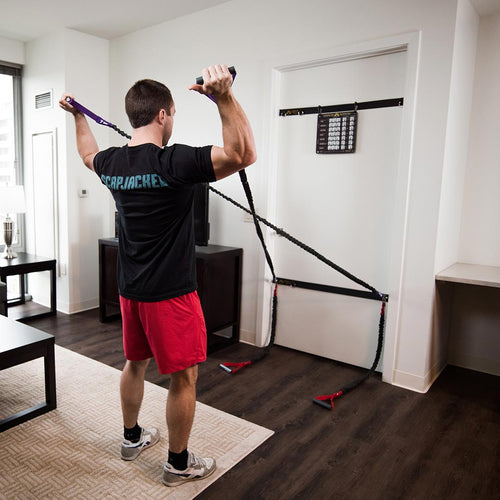
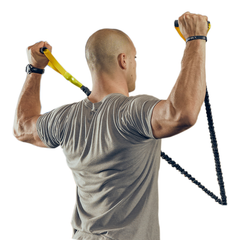
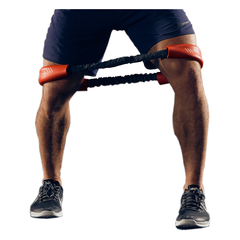
On top of this, a daily dose of the three Crossover Symmetry programs (Shoulder, Hip & Core, and TORQ) helps keep mobility up and pain low. These programs work in this context because they’re short, repeatable, and require very little setup, which makes them easily repeatable.
This is the bare minimum. It simply keeps money flowing into the account.
Why Most People Struggle
Often, people fail because nothing is automated.
If saving for retirement required you to manually log into your bank every Friday and decide whether to transfer money, very few people would ever retire.
Fitness fails the same way when every workout requires motivation, planning, and willpower.
The solution isn’t more discipline—it’s fewer decisions.
Following a program, using the same movements, training on the same days, and at roughly the same time removes friction and improves consistency.
Once movement becomes automatic, consistency stops feeling heroic and starts feeling normal.
The Balance Sheet Reality
Missing one paycheck contribution doesn’t wreck your retirement. But if you stop contributing entirely, the balance will suffer.
For our bodies, strength slowly fades, mobility becomes limited, and capacity erodes in the background—often without obvious warning signs—until daily tasks start feeling expensive.
The point is to keep the deposits going.
Because the people who age the best aren’t the ones who trained the hardest for a short stretch—they’re the ones who quietly invested in their bodies for decades, whether they felt like it or not.