

Why Shoulder Pain Gets Worse at Night (And What to Do About It)

A beat-up shoulder is likely to give you pain at night, which I often get emails about. The statistics say that more than 90% of people with rotator cuff tears experience pain and trouble sleeping, but it can also be a problem with other shoulder disorders.
Despite being downplayed, it's certainly more than just an annoyance.
Insufficient sleep can negatively affect overall health, mood, and performance, which can lead to a vicious cycle in which poor sleep exacerbates pain and discomfort, further disturbing sleep.
If you've been on the 30-Day Fix but continue to have sleep disruptions due to pain, know that it's one of the last and lingering symptoms but will often improve with ongoing work.
Things to Know
The problem likely has multiple interrelated sources.
The space in the shoulder is quite limited, leaving little room for the nerves and arteries to pass through. Depending on your sleep position, you may compress the neurovascular bundle while in bed.
Inflammatory cytokines, such as TNF-α, are also linked to night pain and disturbed sleep. While it’s easy to picture these chemical messengers “pooling” when we lie still, the reality is more complex.
Inflammatory mediators follow circadian rhythms and can rise at night, and the lack of movement reduces the normal muscle pumping that helps modulate tissue sensitivity.
The combination of increased inflammatory signaling and prolonged stillness may heighten pain perception while you’re in bed.
Depending on your sleep position, it can put a stretch on injured tissues for an extended period.
The question then is, "Is there a magical remedy?"
Position
There are a number of ways to lessen the compression on your shoulder while sleeping.
If you sleep on your back, support your whole arm with pillows so that you can see your elbow while on your back.
Or, for a side sleeper, try to sleep with the painful arm on top, with a pillow wedged between your arm and body.
If you must sleep with the painful arm down, then at least sleep on a couple of pillows to bolster the trunk slightly to create a gap for your arm.
This sleep pillow might work, but based on the reviews, the results are mixed for $300 bucks.
If these positions don't work, the third option would be to recline in what's called the beach chair position. It puts the least amount of stress on the rotator cuff, but it's not the most natural sleeping position and might require an expensive new mattress that inclines to this position.

Exercise
An appropriate dose of movement is one of the best ways to down-regulate or desensitize a painful part of the body, which can also help with sleeping.
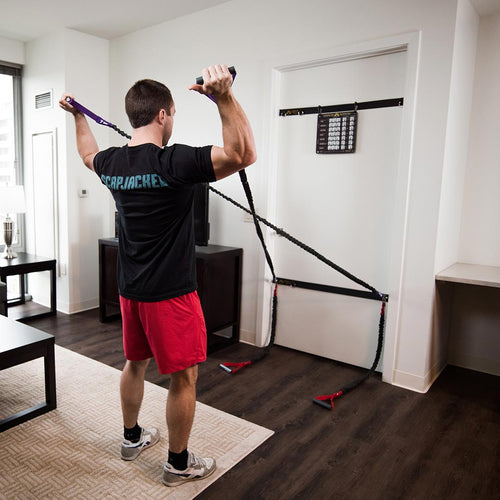
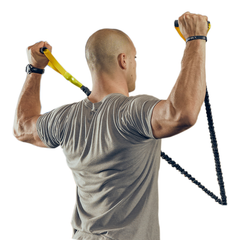
Try adding the Crossover Symmetry Activation to your bedtime routine to help get you through the night. It doesn't have to be heavy; pick up light bands and go through the movements.
Or, if you're without your bands at home or while traveling, try isometrics by simply pressing into the wall.
Start by standing with your back against the wall and driving your elbow backward, then stand with your shoulder against the wall and press into it, and then, bend your elbow to 90 degrees and rotate outward.
Hold each repetition for 6 seconds and complete 6 sets for each movement.

Long & Sure Shots
I initially assumed that nighttime shoulder pain was linked to circulation issues caused by lying supine or compressing the blood flow. Therefore, it seemed that a nitric oxide supplement, like beetroot juice or chews, that would promote vasodilation (and also support better sleep) would help.
However, after doing some reading, I'm not so sure.
The evidence shows that blood flow to the shoulder increases in those with nighttime pain. The case is not closed, but the sleep disturbances seem more related to inflammatory cytokines and compression of injured tissues than a relationship to blood flow.
Instead, my best recommendation is to create a bedtime routine that promotes better sleep overall.
Start with a healthy dinner, turn off electronics, take a hot shower, dim lights, and sleeping in a cold room can enhance your quality of sleep, even with shoulder issues.
Better sleep habits paired with regular shoulder exercises with Crossover Symmetry and adjusting your sleep position is your best shot at getting a good night's sleep with shoulder pain.


)