

Why Crossover Symmetry Beats Most Rehab Plans

One of the more remarkable testimonials we’ve received at Crossover Symmetry involved a massive bill for medical treatments that had unsuccessfully addressed shoulder pain—something Crossover Symmetry then seemingly handled in about six weeks.
I posted it to our social media a while back and then again recently.
It continues to draw some ire from medical professionals, many of whom are confident they could have done better.
 So, I decided to stir the pot. I sent it to @physiogram and asked for a repost.
Physiogram is a platform dedicated to the physical therapy profession. It shares success stories, struggles in the field, and what are best described as inside jokes.
The manager warned me it could get ugly—which I already expected based on the typical tone of the comments section.
To summarize the response…
There were some positive takes, a few attacks on chiropractors and “bad physical therapists,” and others who believed it was a fake story created to sell resistance bands.
For the latter, I can confirm it was a legitimate review posted to our Facebook page. But let’s set that aside and unpack what really matters here.
The first part of the story shouldn’t be all that surprising.
We all know someone who has dealt with lingering pain that wouldn’t go away despite time, effort, and a truckload of money.
The second part—where Crossover Symmetry seems to save the day—should raise some skepticism, especially for someone unfamiliar with the system.
But thoughtful people ask questions. They seek to understand before forming conclusions—a skill that seems to be fading despite having more access to information than ever.
Now, I’d point out to the critics that rehabilitation often fails due to a lack of compliance and consistency.
It’s easy to chalk that up to laziness, but it’s usually deeper than that. More often, it’s a failure of the plan to build self-efficacy and buy-in.
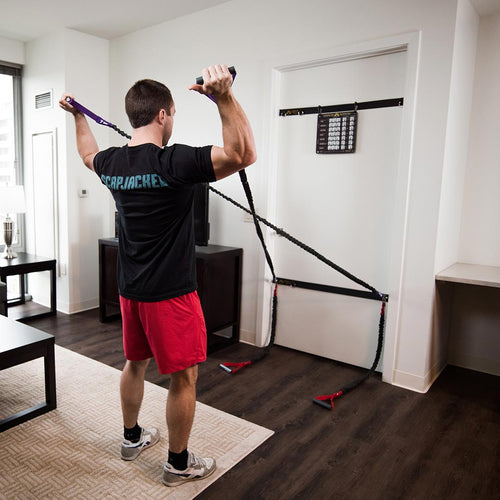
I do believe there’s something special about the programming behind Crossover Symmetry.
It could be the band resistance profiles, the structure of the exercises, the way the bands are crossed, the timing within a workout, or some combination of all of it.
But if I’m being honest, I haven’t found one single “magic” variable that explains why it works better than other options.
What I do see consistently is this: It gets done.
That’s the difference.
What looked like a scattershot approach of treatments searching for a magic bullet turned into 45 days of consistent, structured work—and that consistency continued even after the pain was gone.
Sure, some chronic pain cases require deeper medical evaluation.
But more often than not, lingering pain responds best to a structured plan and long-term consistency.
Ours just happens to come in a box that shows up on your doorstep—and costs a lot less than the usual healthcare maze.
And as one commenter put it: “At least they are better and staying active now.”