

The Truth About Balance Training for Athletes

I’ve been testing out a strength program that includes a single-leg balance in the warm-up.
It started with just standing on one leg. Then it added some arm movements, then hinging forward to touch the toe, and then the last step in the progression was balancing with the eyes closed.
After a few weeks of this, I started wondering…
Can we actually improve balance and proprioception? And if so, what’s the dosage required?
And if we can…
Does it offer me anything meaningful? Or am I just getting better at standing on one leg in the gym?
What Are We Actually Training?
Balance is the contribution of multiple body systems working together.
That includes:
- Proprioception (joint position awareness) – Sensors in muscles, tendons, and joints tell the brain where your body is in space.
- Vision – Your eyes provide spatial reference and orientation. When you remove vision (eyes closed), the difficulty with balance jumps immediately.
- Vestibular system – Located in the inner ear, this detects head position and acceleration and is critical for orientation and postural reflexes.
- Motor control strategies – Your brain organizes muscle firing patterns to keep you upright. This is most noticeable in the muscles around the ankle and hip, but offside musculature also contributes to stability.
- Strength – The intrinsic foot muscles and smaller stabilizers create a stable base, control sway, and adjust pressure distribution. If they fatigue or lack strength, balance suffers regardless of proprioception.
Balance drills scale up on one or multiple of these inputs, such as closing your eyes, standing on one leg, or adding movements like the single-leg hinge or arm movements.
Does Balance Training Work?
The research consistently shows that balance can be improved. If it didn’t, no one would ever learn how to slackline or snowboard.
However, those improvements are highly specific to the task.
If you practice standing on one leg, you mostly get better at… standing on one leg.
So unfortunately, my balance warm-up isn’t going to support my goals of becoming a tightrope walker anytime soon.
On top of that, balance training requires more time and frequency than strength or endurance training.
- Measurable proprioceptive improvements usually take 6–8+ weeks
- Most successful protocols use 4–7x/week, not 2–3x/week
- Progression must increase (unstable surface, eyes closed, perturbations, etc.)
That explains why a quick single-leg balance drill hasn’t moved the needle much.
Great for Gains… or a Waste of Time?
- Ankle sprains
- ACL injuries
- Recurrent lower-extremity injuries
Meta-analyses show reductions in injury risk ranging from 25% to 70% in athletic populations.
Here are some articles to check out:
With improved joint awareness and faster reflexive stabilization, the body becomes better at coordinating and distributing load—especially under fatigue.
But there’s a catch.
These benefits only transfer if you can use them under real-world conditions.
Ankle sprains don’t happen while calmly balancing on one foot. They happen while moving, reacting, and thinking about something else.
That means training should eventually reflect that reality.
Making Balance Training Transfer
To improve real-world carryover, add cognitive and reactive elements:
- Decision-making drills – Balance on one leg while reacting to random directional cues
- Reactive reaching or stepping – Quickly move based on verbal or visual input
- Cognitive challenges (e.g., Stroop test) – Process conflicting information while maintaining stability
The goal is simple: stabilize while thinking and reacting—just like in sport.
Will It Improve Performance?
Don’t expect major improvements in sprint speed, max strength, or power from excessive balance training.
In fact, if every exercise becomes a stability challenge, those qualities can decline.
High stability demands act like a governor on output—great for control and resilience, but limiting for peak performance.
What’s the Takeaway?
Balance training isn’t magic—but it’s not useless either.
I’d rank it B-tier for reducing lower-extremity injury risk, especially for multi-directional athletes like soccer or basketball players.
Practical recommendation:
- 10–15 minutes per day
- Most days of the week
- Best placed in the warm-up
And what should you do?
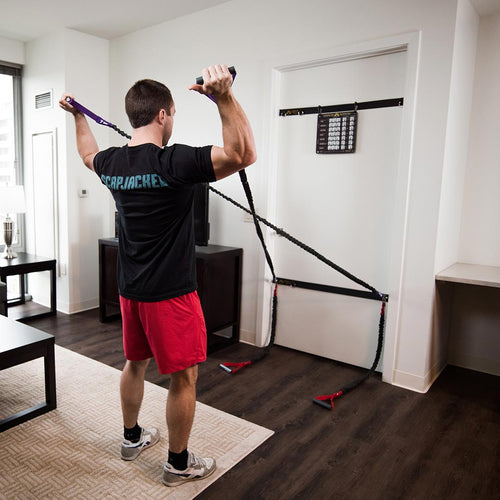
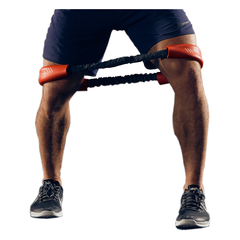
The Crossover Symmetry Hip & Core System combines activation, strength, and plyometric work—delivering proprioceptive training alongside strength development.
For advanced athletes, layer in:
- Eyes-closed movement patterns
- Perturbations
- Unstable loads
If nothing else, it’s a simple way to add variety and challenge to your warm-up—which, sometimes, is exactly what keeps training consistent.
Originally published as Movement #296