

Sit Up Straight? The Oversimplified Advice That Misses the Real Problem

There’s a huge market of people chasing better posture. Believe me, it comes up every time I explore future strategies for Crossover Symmetry.
And I’m sure we could do pretty well.
Picture a muted infomercial featuring unhappy people in frumpy clothes, slouching because their muscles are too weak to pull their shoulders back or lift their head up.
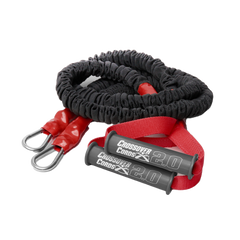
Then, cue the color. The box of Crossover Cords arrives!
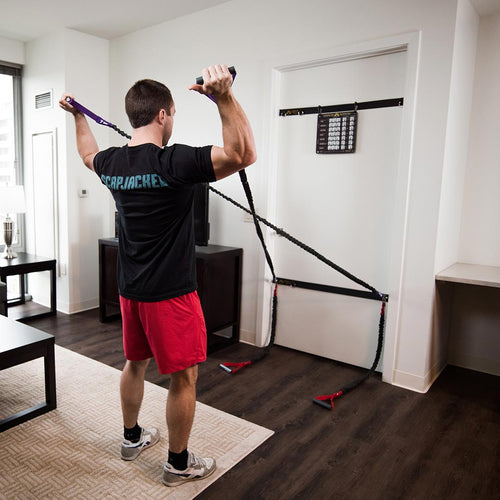
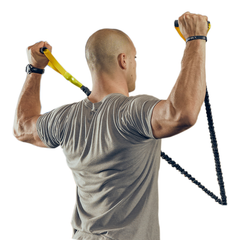
Almost instantly, everyone’s taller, happier, and sexier because they’ve discovered the secret of being #scapjacked.
So why am I not already raking it in with this strategy?
Does Posture = Pain?
You know what I mean by “bad posture.” That classic desk-job look, slouched upper back, rounded shoulders, chin jutting forward.
It’s sometimes called upper cross syndrome, but here’s the truth: there’s no actual diagnostic criteria for “bad posture.” It’s more of a hunch that’s often used to explain all of life’s problems…to then sell a quick fix.
Now, from a theoretical standpoint, our body’s position can absolutely change the alignment and forces on our body. The position of the scapula, shoulder, and neck all impact how surrounding tissues are loaded.
For example, it’s often cited that your head weighs about 12 lb when it sits directly over your shoulders, but tilt it forward 45 degrees to look at your phone, and the effective load on your neck jumps to roughly 50 lb. That’s a bowling ball and a half hanging from your spine.
That’s a scary thought, especially when the neck is pictured in red, and the vertebrae are all crumbling away, but when you dig into the research, the link between posture and pain gets fuzzy.
- A systematic review found that standing up straight does increase shoulder range of motion, but overall found a poor relationship between thoracic kyphosis in groups with and without shoulder pain.
- The same thing was demonstrated in a study in people with “shoulder impingement.” Sitting up straight improved range of motion but didn’t reduce pain in the short term.
- Another study of volleyball players found no strong association between forward shoulder angle and the pectoralis minor length index (a measure often associated with rounded shoulders) in players with and without shoulder pain.
- This study found no meaningful connection between “text neck” posture and pain.
So, overall, posture alone doesn’t seem to be the underlying cause of pain. Although it may be linked in some situations, specifically when pain itself leads people to adopt protective or limited postures.
Still…Sit Up Straight
Now, don’t get me wrong! I do think posture matters.
But not necessarily because you’re drastically changing the load on your joints. Rather, when you work on your posture, you’re not just standing taller—you’re moving differently. And that’s often the real key to getting out of pain.
Also, better posture tends to make people feel better. When you sit or stand tall, you feel more confident, more energized, and more aware of your body.
If you’re ever in a situation that makes you nervous, try tucking your chin, dropping your shoulders, and standing taller. People may or may not view you differently, but you’ll feel more confident either way.
So yes, train the muscles that support good posture and keep the joints moving freely. Strengthen your mid-back, scapular stabilizers, and deep neck flexors, while maintaining mobility through your thoracic spine and chest.
But the goal I'm really selling isn't standing upright like a soldier at all times. It’s to find positions that feel efficient, comfortable, and confident for what you’re doing. I don’t really care how you sit, as long as it’s not for too long and it’s not the only position your body knows.
Posture isn’t the villain or the hero—it’s just one of many pieces in our movement puzzle.
You’ll have better success focusing less on holding a certain position and more on moving often in your physical journey.
Originally published as Movement #282