

Nearly Everyone Over 50 Has a “Rotator Cuff Tear”

Researchers in Finland scanned the shoulders of over 600 people aged 41 to 76 and found that 99% had a shoulder problem.
But these weren’t injured patients seeking treatment…
They were just regular people pulled off the streets. About 1 in 5 reported some degree of shoulder pain, but most subjects had zero symptoms.

Just like gray hair and wrinkles, the rotator cuff ages and shows wear over time. To the point that if you're over 40, something will likely show up on an MRI report, and the chances of having a rotator cuff tear are about as common as NOT having one once you hit your 50s — with or without pain.
Therefore, it appears we’re overdiagnosing normal aging, but what should we do with this information?
And before moving on, it's important to note that acknowledging the fact that imaging findings are common does NOT mean your pain isn’t real. What this research suggests is that structural findings on imaging don’t always explain why that pain exists — and that’s an important distinction.
Avoid Unnecessary Imaging
First off, imaging has tremendous value. It helps rule out rare but serious pathology and guides decisions after trauma. But routine imaging for every ache and pain often creates more problems than it solves.
Once a “tear” appears on a report, the story changes in our heads. People become cautious, and they start assuming surgery is inevitable — all before it’s even determined whether that finding actually matters.
One of the strongest predictors of successful outcomes isn’t the severity of the pathology — it’s understanding the condition and believing that improvement is possible regardless of the damage.
Not to mention… imaging isn’t cheap.
Between MRIs and follow-ups, the cost adds up quickly — financially and psychologically.
Or, if an MRI report simply said “age-related tendon changes,” instead of “rotator cuff tear,” I bet a lot of surgeries would be avoided.
Worry About Capacity, Not Images
This study reinforces what’s been demonstrated throughout the body…
Pain and structure are rarely a perfect match.
Shoulders, backs, knees, and hips all show you can have pristine imaging and significant pain, or you can have ugly imaging and feel completely fine.
So rather than worrying about MRI findings, grade yourself on function.
1. Do you have adequate range of motion?
Can you reach overhead, behind your back, and rotate your arm without major restriction or discomfort? You don’t need gymnast-level mobility, but you do need enough motion to live and train without compensating.
2. Can you tolerate load?
Can your shoulder handle resistance — lifting, pushing, pulling, throwing — without breaking down? Strength is what allows tissue to absorb stress and compensate for the small structural changes that naturally occur over time.
3. Do you recover between sessions?
A bit of soreness after a workout, practice, or even yard work is normal. But that should settle within 24–48 hours. Pain that progressively worsens during activity or week to week is a red flag.
If recovery is lagging, you may need to adjust load and volume while gradually building strength and endurance. And don’t ignore sleep, stress management, and nutrition — they directly influence your ability to bounce back.
Recovery is just as telling about your capacity as the weights you lift.
You Need Work (Even Without Pain)
Learning that structural “damage” is common doesn’t let anyone off the hook. It actually does the opposite.
If aging and wear are normal, then maintenance becomes non-negotiable.
You need regular work to maintain — or improve — strength, stability, and range of motion for your entire life, not just when pain shows up.
It’s a fair question if you’re wondering, “How do I know I won’t make this worse?” Research shows that most partial-thickness rotator cuff tears stay the same over time. And in most cases, it's progressive strengthening and smart loading that improve the shoulder rather than harm it.
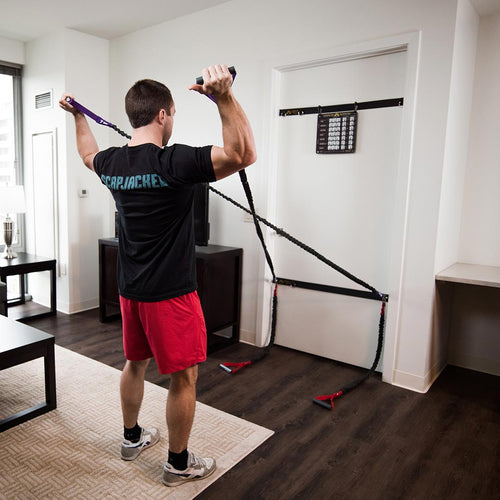
Crossover Symmetry provides a structured plan you can follow daily without any guesswork. Just like brushing your teeth or contributing to a retirement account, small consistent deposits into strength and mobility compound over time.
Overall, don’t sweat an MRI. Focus on what you can control.
Originally published as Movement #295