We previously studied dance in The Movement.
We concluded that variability in human movement is not a flaw; instead, it's a feature that enables us to adapt, learn, and successfully solve movement problems in different contexts.
Nikolai Bernstein pioneered this idea. He demonstrated that our bodies naturally introduce subtle variations in posture, muscle activation, and timing.
Bernstein’s landmark scientific work began in 1922 when he studied movement to optimize productivity for Moscow’s Central Institute of Labour. His primitive motion capture system—what he called cyclometry—calculated velocities, accelerations, and muscle torques at each joint of the moving body.
By analyzing expert craftsmen, he showed that repetitive tasks—like striking a chisel with a hammer—are composed of smaller movements within a larger movement. If one of those smaller components changes, the entire movement changes.
In other words, no two movements are ever truly identical. That variability is what allows us to adapt and perform in ever-changing environments.
But What About Crossover Symmetry?
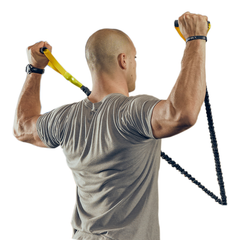
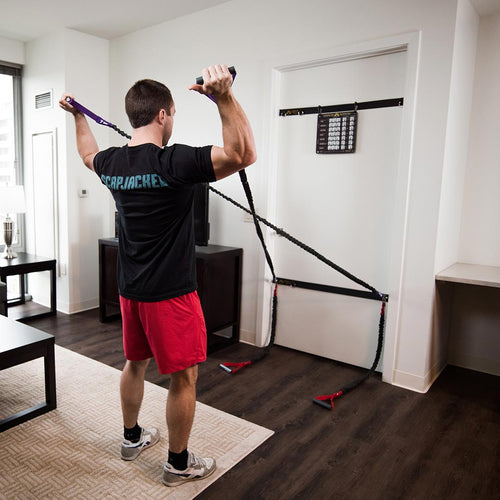
Here’s the obvious tension. Crossover Symmetry training promotes a very specific way to perform the exercises. That seems to contradict the idea that movement should vary.
So which is it—precision or variability?
A few thoughts.
First, our lives today are relatively static compared to previous generations. Most of our “manual labor” now involves a keyboard and a mouse. We don’t get natural variability from daily tasks the way craftsmen once did.
Second, the training actually introduces variability compared to how most people move all day. It promotes scapular movement and rotation at the shoulder when the arm is elevated—motions that are often underused in modern life.
Third, instructions build confidence.
If I dump flour, eggs, and sugar on the counter and say, “Make me a cake,” most people freeze. But give someone a recipe with measurements and steps, and they’ll go for it.
Clear movement instructions serve the same purpose. They create structure, reduce uncertainty, and increase adherence.
And adherence is what drives long-term results.
“Repetition Without Repetition”
Bernstein famously described skilled movement as “repetition without repetition.” The outcome is similar—but the internal solution is never exactly the same.
Once you’ve mastered the Crossover Symmetry patterns, that’s where this concept comes alive.
Here are ways to layer in variability:
1. Change the Speed
Use the Activation+ or Recovery programs. Same patterns, different tempo. Slower work increases time under tension and motor control. Faster work challenges coordination and elastic contribution.
2. Increase the Resistance
If you apply the movement modifications correctly, you can typically handle more load. Heavier resistance changes motor recruitment and joint demand.
3. Decrease the Resistance
Lighter bands allow you to refine scapular motion and feel different muscle groups contributing. This often improves awareness and quality.
4. Add Strength
The Strength Program is the most dynamic option. Flow through it a few times per week to expose your shoulder to greater ranges and forces.
5. Explore Additional Training
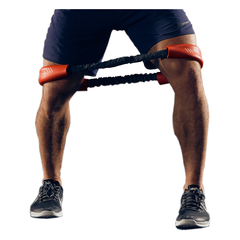
Inside the Training Zone, you’ll find programs that use the bands in different ways. New setups and positions introduce fresh movement problems for your body to solve.
The Real Takeaway
Don’t obsess over perfection.
Master the recipe first. Then experiment like a chef.
Precision builds the foundation. Variability builds adaptability.
Most importantly—focus on consistency. The body adapts to what you do repeatedly, even if the repetition is never exactly the same.
Originally published as Movement #208